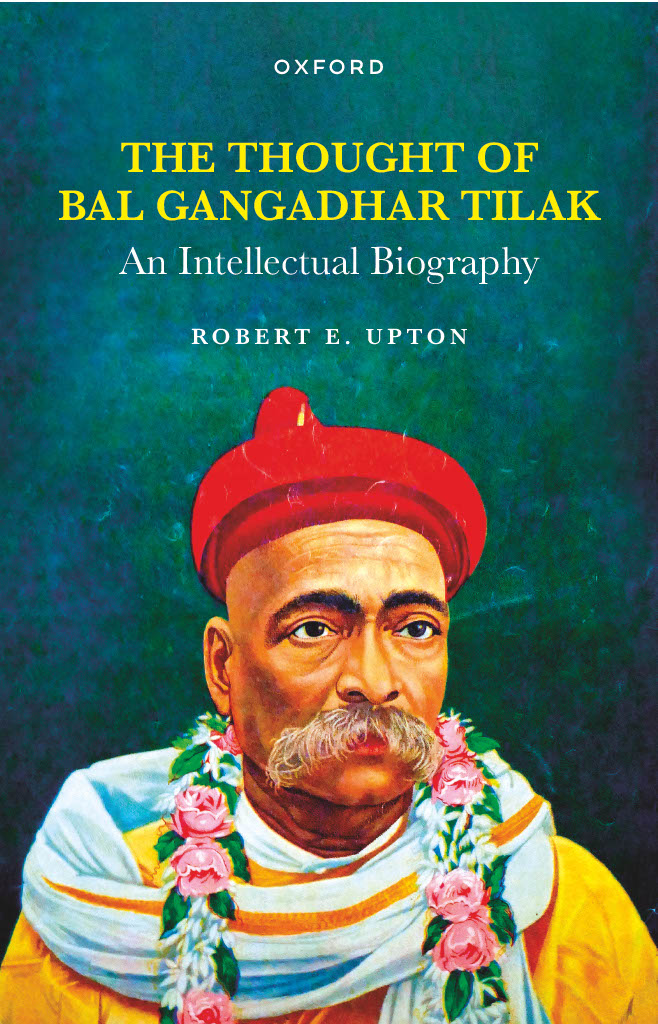
The publication of this pioneering intellectual biography of Bal Gangadhar Tilak (1856-1920), the ‘Lokamanya’, or ‘revered by the people’, and probably the most influential Indian nationalist before Gandhi’s rise to prominence, is an exciting moment, and the culmination of many years of research and reflection.
Tilak, whom Gandhi called a ‘Maker of Modern India’ upon his death, was not just influential on Gandhi; he continues to shape cultural and political identities in India today. The book surveys just how widely Tilak is remembered today, and in what ways — as patriot, theologian, communist, Brahmin supermacist, misogynist, social reformer, secularist or Hindu ethno-nationalist. After situating Tilak in his regional cultural background, it then delves into his thought, to allow the reader to get to grips with him through an analysis of Tilak’s own journalism, speeches, and other writings. The quotidian writings and statements of this jobbing journalist are set alongside his larger works, such as his canonical treatise on the Bhagavad Gita, the Gita Rahasya (published 1915).
The book makes clear the contrast between Tilak’s views on Indian society and those of the next generation of Hindu nationalists in the region, like V. D. Savarkar: Tilak’s was a pluralistic and non-ethnic conception of the nation, for all his chauvinism. His calls to violence against the colonial state put in him a radical liberal tradition, while his ideas on the tactic of ‘passive resistance’ anticipate Gandhi. To undertake the work of national renewal, meanwhile, Hindu society’s ‘caste’ ideas had to be shaken up, with the ‘warriorness’ of the Kshatriyas diffused throughout — something which would still leave India’s Brahmins with an elevated role and status.
The book also examines how on earth the extraordinary range of views of Tilak today was generated in the century after his death — and pays particualr attention to the decade after his death, when he was made a posthumous proponent of a Hindu nationalist tradition which he had in fact opposed during his life.
Buy here:

 Robert E. Upton